Amir Pousti

Finance

How money shapes decisions.

Finance connects businesses, investors and the wider economy. My work explores how capital is raised and invested, how risk is managed, and how markets respond to change.

Finance Research Project · Individual · August 2026

Ferrari: Scarcity Is the Moat. Valuation Is the Constraint.

Can an exceptional scarcity-led business justify an exceptional valuation?

I built a 24-sheet operating and valuation model covering Ferrari’s historical performance, forecast drivers, free cash flow, beta, WACC, peer multiples, and dividends.

The original conclusion was deliberately restrained: the franchise was exceptional, but the blended target implied just 2.03% upside.

Valuation as of 30 June 2026

Original view HOLD
Blended target €325.32
Market price €318.85
Terminal value 75%
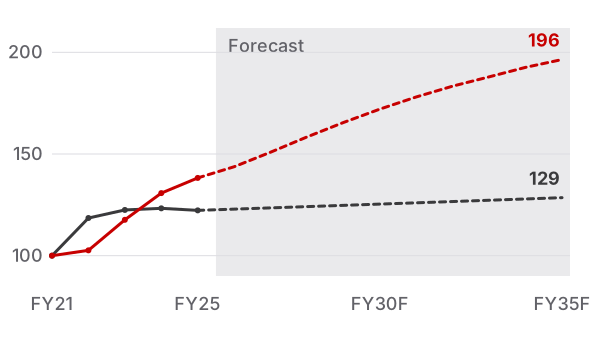
Scarcity shifts growth from volume to value
FY2021 = 100
Ferrari shipments and cars-and-spares revenue per shipment, indexed to FY2021. Dashed lines indicate forecasts from FY2026.
View chart data
Original model data. F denotes an analyst forecast; historical data runs through FY2025.
Financial yearShipmentsCars & spares revenue / shipment (€000)
FY2111,155.00318.497
FY2213,221.00326.838
FY2313,663.00374.675
FY2413,752.00416.499
FY2513,640.00440.267
FY26F13,708.20457.790
FY27F13,776.74480.566
FY28F13,845.62504.475
FY29F13,914.85527.063
FY30F13,984.43548.041
FY31F14,054.35567.127
FY32F14,124.62584.056
FY33F14,195.24598.584
FY34F14,266.22613.475
FY35F14,337.55625.683
Shipments Cars & spares revenue per shipment

By FY2025, shipments were broadly flat from FY2023 while cars-and-spares revenue per shipment had risen to approximately €440,000.

02

Financial projects

Group projects · Summaries describe the team’s work.

Financial statement analysis · Group project

Diageo before the deal

Five-year financial-statement analysis and two-year forecasts assessed the acquisition case. FY2025 gross margin near 60% and $2.69bn free cash flow supported the business, while rising inventory days and impairments weakened the case.

Decisions and lessons
Decision
Assess the acquisition case through cash conversion as well as margins.
Lesson
Strong gross margins can coexist with cash tied up in inventory and impairment risk.
Next check
Reconcile forecast working capital with the operating assumptions before relying on headline free cash flow.

Macroeconomic research · Group project

Did credibility make disinflation less costly?

Inflation, expectations, unemployment and GDP were compared around New Zealand’s 1989–92 regime change. Inflation fell from 9.28% to 3.23%, but unemployment rose from 5.76% to 9.75%; concurrent reforms limited attribution to inflation targeting.

Decisions and lessons
Decision
Compare inflation, expectations and real-economy outcomes around the regime change.
Lesson
Falling inflation alongside rising unemployment does not isolate the effect of inflation targeting when other reforms occur at the same time.
Next check
A follow-up would test alternative comparison periods and a credible counterfactual.

Corporate valuation · Group project

Reconciling Lennox’s competing values

Five-year cash-flow forecasts were valued using DCF, peer multiples and dividend models. The report’s blended estimate was $523.81 per share versus its $511.42 reference price. A cash-flow table discrepancy requires reconciliation before those estimates can be treated as verified.

Decisions and lessons
Decision
Compare DCF, peer multiples and dividends before combining their estimates.
Lesson
Differences between methods require explanation; the source cash-flow table also needs arithmetic reconciliation.
Next check
Resolve the FCFF discrepancy before updating or relying on the reported blended value.

Quantitative portfolio analysis · Group project

When the required portfolio does not exist

A mean–variance frontier used five years of weekly data for CMG, ORLY, MNST and TSLA. The lowest reported probability of returns below 8% was 23.07%; no portfolio in the reported analysis met the required sub-20% downside constraint.

Decisions and lessons
Decision
Optimise the probability of missing the return threshold as well as examining minimum variance.
Lesson
The best reported portfolio still missed the probability constraint; a higher expected return alone did not meet the brief.
Next check
Reproduce the search and short-selling constraints, then test the sensitivity to estimated returns and covariances.

Fixed-income research · Group project

When a rating changes the risk it measures

Research on regulatory certification, rating triggers and financing decisions examined how ratings can amplify default risk. Evidence included a nearly 55bp yield reduction for firms rated more favourably by DBRS after its NRSRO recognition.

Decisions and lessons
Decision
Examine ratings as inputs to financing decisions, including regulatory recognition and contractual triggers.
Lesson
A rating can change borrowing conditions as well as describe them, making feedback part of the risk analysis.
Next check
A further study would separate changes in credit fundamentals from changes caused by certification or financing restrictions.

Derivatives modelling · Group project

Pricing an S&P 500 option through a binomial tree

The study used 252 trading days of S&P 500 and Treasury-bill data. Its one-step issuance example valued a call at 281.85 index points with 9.6278% volatility; full-sample volatility was 18.57%. Explore the dated issuance case and inspect how its tree changes.

Decisions and lessons
Decision
Compare simple binomial trees and an illustrative time-varying specification.
Lesson
Ex-post parameter estimates cannot be treated as information available at issuance. Rate conventions must also agree throughout the tree.
Next check
Use the dated issuance inputs consistently, then test a finer tree with information available at that date.

Try the option-pricing explorer